
Buyers Guide
Things to consider when planning your pool
Correct planning and preparation is an important process to your swimming pool project. Get this part right and it will mean your installation will go to plan, stick within timescales and more importantly remain within budget.
To help with your planning and preparation stages we have provided some information below which you may find useful.
Choosing your location
Before starting your project it is worth checking to ensure that you do not require any specific planning permissions. For instance, if you live in a conservation area etc.
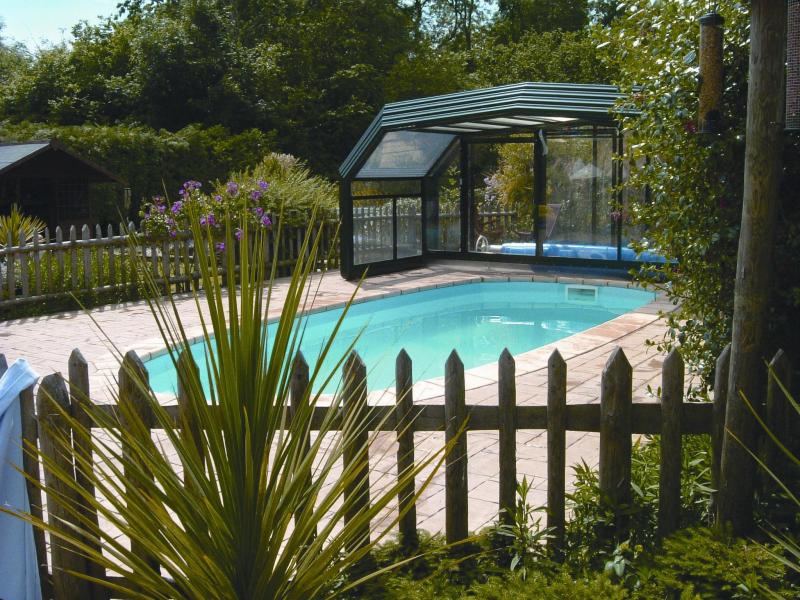
Outdoor Pools – When choosing the best location for your pool, be sure to consider access; trees, overhead cables, the possibility of underground pipes etc. Ideally it should be flat land that benefits from plenty of sunshine. Consider the location of your plant room as this will be relevant when calculating the amount of pipe work you will need for the installation. The size of the plant room need only be 1.5m x 1.0m perhaps a little bigger if you are going to be housing a heating boiler within it.
Indoor Pools – With one-piece fibreglass pools, there needs to be sufficient access into the building. With new builds this is easy as pools are often lowered in prior to the roof going on.
If possible, it is advisable to have a separate plant room although this need only be separated by a wall. It ensures that all the unsightly filtration equipment can be kept out of view.
Where the plant room is adjacent to the pool room, through the wall dehumidifying equipment is available. This is a useful option as it enables you to house all the pool equipment within one area.
Access
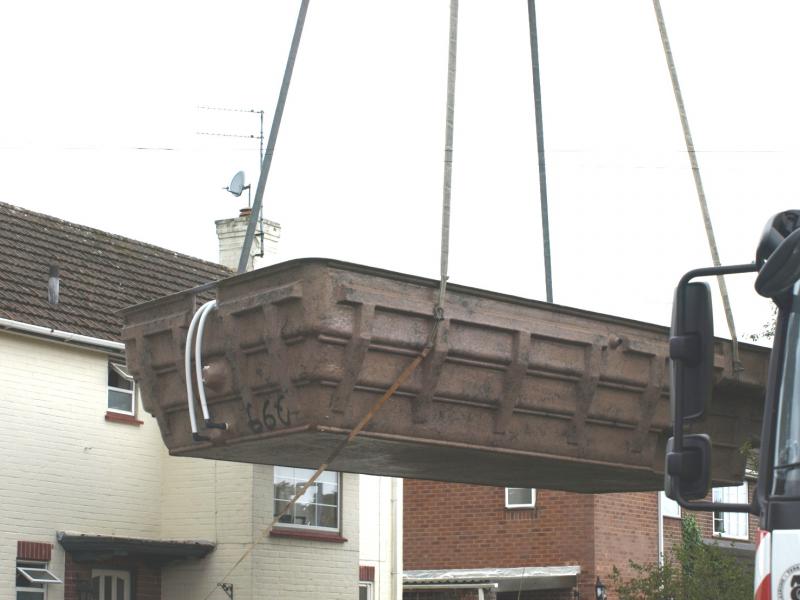
With most pool deliveries, access is not a problem. It is quite common for our French driver to lift the pool over a garden fence or wall into the garden area.
Other deliveries have involved the pool being craned over the house because there is no other access. The type of crane required will depend on the overall reach needed and the weight of the pool. A crane hire company would calculate this for you and it would cost a lot less than you would perhaps imagine.
Most access obstacles can be overcome.
Selecting your pool
It’s a personal choice; however give some consideration to the options available to you:
- Flat bottomed or deep ended?
Flat bottomed pools have become the most popular models. This is partly due to them holding less water, therefore easier and cheaper to heat and maintain. It can be a lot more fun to play games like water volleyball as the whole swim area becomes more usable. - Large or small?
You can combine even the smallest pool with a Fastlane® Swimming Machine or counter current Swimjet and it becomes a centre for exercise, therapy and fitness.
How a pool works
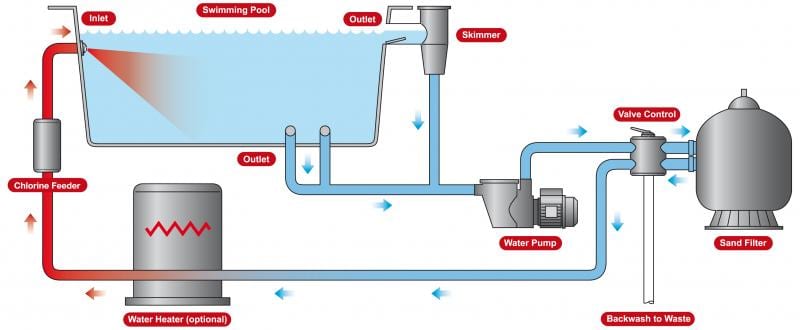
Understanding how a pool works will help with your plant room planning. All of the equipment shown in the diagram below is included in the price of our pools with the exception of the chlorine feeder and water heater which can be purchased separately.
Equipment to consider
Our pools come complete with all the filtration equipment and a full maintenance kit. You may also want to consider budgeting for other options such as:
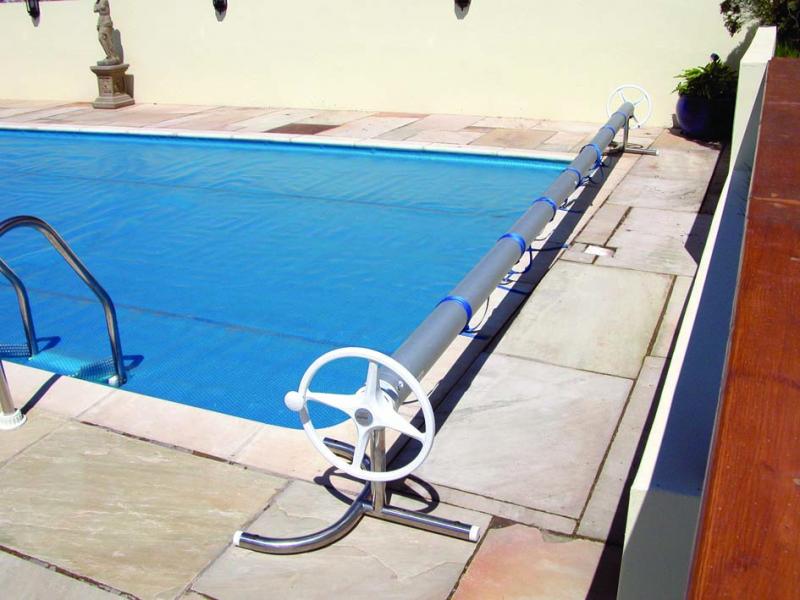
Cover – For an outdoor pool a solar cover will take advantage of the sun’s rays whereas an indoor pool benefits more from a thermal blanket to retain the heat. Another option to consider if you have young children and the pool is not fenced off is a safety cover.
Cover reel – It’s handy to be able to pull the cover on and off on your own and the cover reel allows one person to do this.
Automatic Chlorine feeder – This useful gadget saves you having to hand dose the chlorine into the pool and will do it automatically for you.
Equipment to consider specifically for indoor pools
Every indoor swimming pool will require some form of dehumidification and ventilation to control the condensation and evaporation from the warm pool water. A dehumidifying unit will extract the water from the air and a heat recovery ventilation unit will dispose of stale air without the risk of losing heat. Without this equipment the fabrication of your building will deteriorate.
Have a thought to how you plan to heat your pool hall. Under floor heating is becoming the most popular method. If this is not possible, dehumidifying units can be supplied with LPHW heater batteries which will provide pool room air heating, eliminating the need for separate fan heaters or radiators.
Consider how you will heat your pool
Although we are unable to depend on the UK weather to heat our pools, solar is becoming more popular because of the environmental impact and it only relies on daylight not sunshine! This can be an effective and very efficient method to heat your pool.
If your house boiler is accessible and has the capacity, this could be an option available to you by purchasing an inexpensive heat exchanger. Other alternatives are dedicated oil or gas boilers, heat pumps and electric heaters.
Bear in mind that by investing well in an efficient heating method at the offset will save you money on running costs in the future.
Pool surround
If you have young children you may consider some form of non-slip flooring for safety reasons.
Coping stones are very popular for outdoor pools. They provide an extremely neat finish and if ordered with the pool come pre-molded to fit the pools perimeter shape.
For indoor pools there are endless options open to you here. It is more common for an indoor pool to have the chosen flooring continued right to the pool edge rather than incorporate coping stones but this is purely a personal choice.
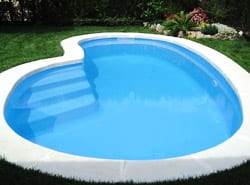
The work involved
Installing a fibreglass pool is not complicated and can be done by a keen DIYer or general builder. Give a thought to what you will do with the earth as excavated soil has a far greater volume to it. The main stages to the project are:
- The dig
- Leveling and preparing the base
- Lowering the pool in and leveling
- Connecting pipes and plant room installation
- Filling with water and backfilling hole
- Coping
Depending on your plumbing skills, you may want some plumbing assistance with the plant room installation. We would recommend that an electrician carries out the lighting and electrical work.
For more detailed information on the installation process click here.
On-going pool maintenance
In order to preserve a healthy pool, there are 4 areas which need to be maintained:
1- Physical cleanliness of pool – this can be made easier by investing in an automatic pool cleaner.
2- Maintenance of correct acidity/alkalinity (pH level) – A test kit is included in the maintenance kit we provide to help with this.
3- Correct sanitization of the water – most customers purchase an automatic chlorine/bromine feeder which saves having to hand dose the chemicals.
4- Filter maintenance – Every so often, depending on how frequently the pool is used, the filter will require a backwash which is a very simple process. This removes all the debris and oils from the media and ensures the filter operates efficiently and effectively.